How to Select the Right Spur Gear for Your Precision Application- Expert Advice from IOU LLC
How to Select the Right Spur Gear for Your Precision Application: Expert Advice from IOU LLC
When it comes to precision applications in machinery, selecting the right spur gear is crucial for ensuring efficiency, longevity, and optimal performance. Spur gears, often used for power transmission between parallel shafts, can make or break the effectiveness of your system. In this article, we will explore the key factors to consider when choosing the perfect spur gear for your specific application. Leveraging the expertise of IOU LLC, a leader in providing custom solutions for gear-related needs, we’ll offer expert advice to help you make an informed decision.
Table of Contents
- Introduction
- Understanding Spur Gears and Their Role in Precision Applications
- Key Factors to Consider When Selecting Spur Gears
- Why Choose IOU LLC for Custom Spur Gear Solutions
- Conclusion
Understanding Spur Gears and Their Role in Precision Applications
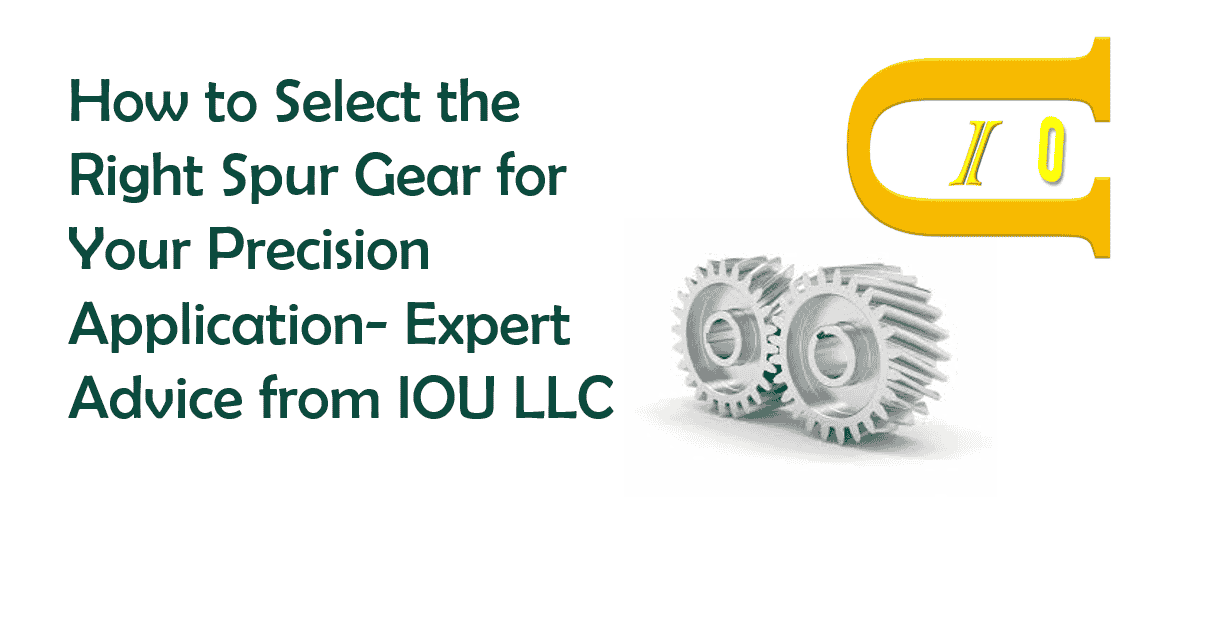
Spur gears are one of the most common types of gears, featuring straight teeth that are parallel to the axis of rotation. These gears are ideal for transmitting power between parallel shafts and are found in a wide variety of machinery and equipment, from industrial machines to automotive systems.
In precision applications, the performance of the spur gear can impact the overall functionality of the system. Choosing the wrong gear can lead to inefficiencies, excessive wear, and even failure of critical machinery. Therefore, it’s essential to understand the requirements of your application and select a spur gear that meets those needs.
Key Factors to Consider When Selecting Spur Gears
1. Material Selection
The material of a spur gear greatly influences its durability, strength, and resistance to wear and tear. Common materials for spur gears include steel, stainless steel, brass, and plastic, each of which has its own benefits and drawbacks. For high-load, high-stress environments, steel is typically the best option due to its superior strength and resistance to deformation. For lighter applications or where noise reduction is a concern, materials like plastic or brass may be more appropriate.
Expert Tip: At IOU LLC, our team can help you choose the right material based on your specific operating conditions, including factors like load capacity, environmental conditions, and the desired lifespan of the gear.
2. Gear Ratio
The gear ratio is a critical aspect when selecting a spur gear for precision applications. The gear ratio defines the relationship between the number of teeth on the driving gear and the number of teeth on the driven gear. A higher gear ratio translates to higher torque but slower speed, while a lower gear ratio results in higher speed but lower torque. It's important to choose a gear ratio that matches the operational demands of your application.
Expert Tip: For precision applications requiring high accuracy and minimal backlash, IOU LLC’s engineering team can assist in determining the optimal gear ratio that balances speed and torque to meet your specific needs.
3. Pitch and Tooth Profile
The pitch of a spur gear refers to the distance between the teeth, and it directly affects the smoothness and efficiency of the gear’s operation. A finer pitch is typically used for high-precision applications where noise reduction and smoother operation are paramount. Additionally, the tooth profile, which is the shape and design of the gear teeth, influences how well the gears mesh and interact. Properly meshing gears reduce wear and increase the longevity of both the gears and the associated components.
Expert Tip: IOU LLC offers custom tooth profiles tailored to your precise requirements, ensuring minimal backlash and optimal meshing performance for your application.
4. Load and Power Requirements
Understanding the load and power requirements of your system is essential in selecting the right spur gear. Gears are subject to varying forces depending on the torque and rotational speed in your application. If the load is heavy or the system is operating at high speeds, choosing a gear with an appropriate load-bearing capacity and power transmission efficiency is crucial. This will prevent premature wear and tear and ensure reliable operation.
Expert Tip: IOU LLC specializes in providing custom spur gears engineered to handle high loads and specific power transmission demands, offering solutions for even the most challenging applications.
5. Precision and Tolerances
In high-precision applications, tolerances and gear accuracy are paramount. A gear with tighter tolerances will ensure that the teeth fit together more precisely, leading to smoother operation, less noise, and greater efficiency. When selecting spur gears for precision systems, consider the level of accuracy required for your application and the potential impact on performance.
Expert Tip: IOU LLC’s commitment to precision manufacturing means we can produce spur gears with tight tolerances to ensure the highest level of accuracy and performance, even for the most demanding applications.
6. Environmental Considerations
The operating environment can significantly affect the performance and longevity of spur gears. Factors such as temperature extremes, humidity, exposure to corrosive substances, and potential for contamination all play a role in gear selection. For instance, if your application operates in a corrosive environment, you may need gears made from stainless steel or plastic to resist rust and degradation.
Expert Tip: At IOU LLC, we offer a range of materials and coatings designed to withstand specific environmental conditions, ensuring that your spur gears perform optimally in any setting.
Why Choose IOU LLC for Custom Spur Gear Solutions?
At IOU LLC, we specialize in delivering precision-engineered, custom spur gears tailored to the unique requirements of your application. Our team of experts works closely with you to understand your specific needs and challenges, providing you with the best solution for your system. From material selection to gear design and manufacturing, IOU LLC ensures that every gear is made to the highest standards of quality and performance.
Whether you're dealing with high load applications, precision machinery, or challenging environmental conditions, IOU LLC has the expertise to deliver a gear solution that meets your exact specifications.
Conclusion
Selecting the right spur gear for your precision application is a critical step in ensuring the reliability and efficiency of your system. By considering factors such as material, gear ratio, pitch, load requirements, and environmental conditions, you can choose a spur gear that provides optimal performance. With the expertise of IOU LLC, you can rest assured that your custom spur gear solutions will meet the highest standards of quality, precision, and durability.
For expert advice and custom gear solutions, contact IOU LLC today. Let us help you select the perfect spur gear for your precision application.
Related Products
Here are some relevant stats and facts that could enhance the article and provide valuable insights:
Stats and Facts:
-
Global Gear Market Size:
- The global gear market is projected to reach $271.98 billion by 2026, growing at a CAGR (Compound Annual Growth Rate) of 6.6% from 2019 to 2026. (Source: Grand View Research)
-
Importance of Gear Material:
- According to a study, up to 70% of gear failures in mechanical systems are attributed to improper material selection. Choosing the right material helps reduce wear and tear, and improves the gear's efficiency and lifespan. (Source: Gear Solutions)
-
Impact of Gear Ratio on Efficiency:
- The gear ratio directly affects the efficiency of a system. A well-optimized gear ratio can improve system efficiency by up to 15% in specific applications, such as automotive or manufacturing equipment. (Source: Mechanical Design Engineering Handbook)
-
Spur Gears in Precision Applications:
- Spur gears are among the most widely used gear types in industries. They are typically used in applications with gear ratios less than 10:1, which are ideal for moderate-speed applications. (Source: Gear Technology)
-
Load and Torque Considerations:
- For precision applications, spur gears with a high torque rating can withstand up to 150% of the nominal load without failure, making them suitable for high-load industrial applications. (Source: The Gear Works)
-
Environmental Factors:
- The selection of materials that resist corrosion can increase gear lifespan by 50% in environments exposed to harsh conditions, such as marine or chemical processing environments. (Source: Manufacturing.net)
-
Precision Manufacturing Tolerances:
- In high-precision gear applications, the allowable tolerance for gear teeth is often in the range of 0.001-0.005 inches, which ensures minimal backlash and precise meshing. (Source: The American Gear Manufacturers Association)
-
Customized Spur Gear Solutions:
- Custom gear manufacturing can reduce gear failures by up to 30% by ensuring that the gears are specifically designed for the intended application’s unique load, speed, and environmental conditions. (Source: Custom Gear Solutions)